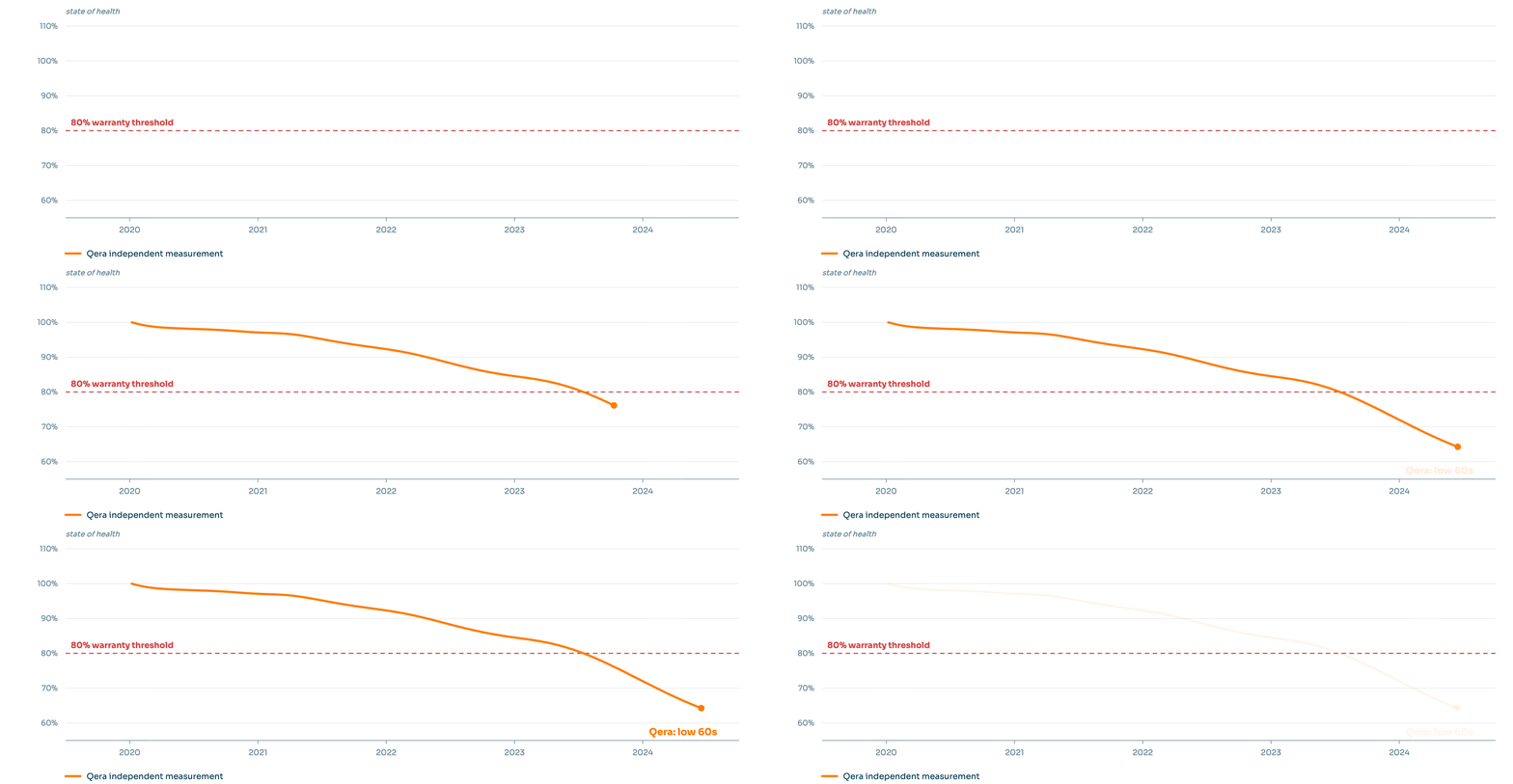

Qera helped this European bus operator to measure the state of health (SoH) of its batteries with Battery Intelligence. The continuous measurements showed a series of buses falling below the 80% warranty threshold, while the manufacturers' data still put them above the threshold. With its own independent data as evidence, the operator successfully claimed warranty for the whole series of electric vehicles.
Intro
This European public transport operator runs a large electric bus fleet with buses from several different manufacturers. The battery is by far the most expensive part of an electric bus and replacements cost about 100,000 euros per battery. Therefore, the operator wants to know the real state of health for every battery and for three reasons:
- They wanted to make it easier for their planners to plan around how much energy each bus has and which bus should take the longest routes.
- Their battery warranties have a threshold of 80% state of health. So the operator needs to know when a battery reaches that point and how long it takes to reach that point.
- The finance team needs state of health data to set depreciation and budget replacements five to ten years ahead to make optimal plans.
Challenge
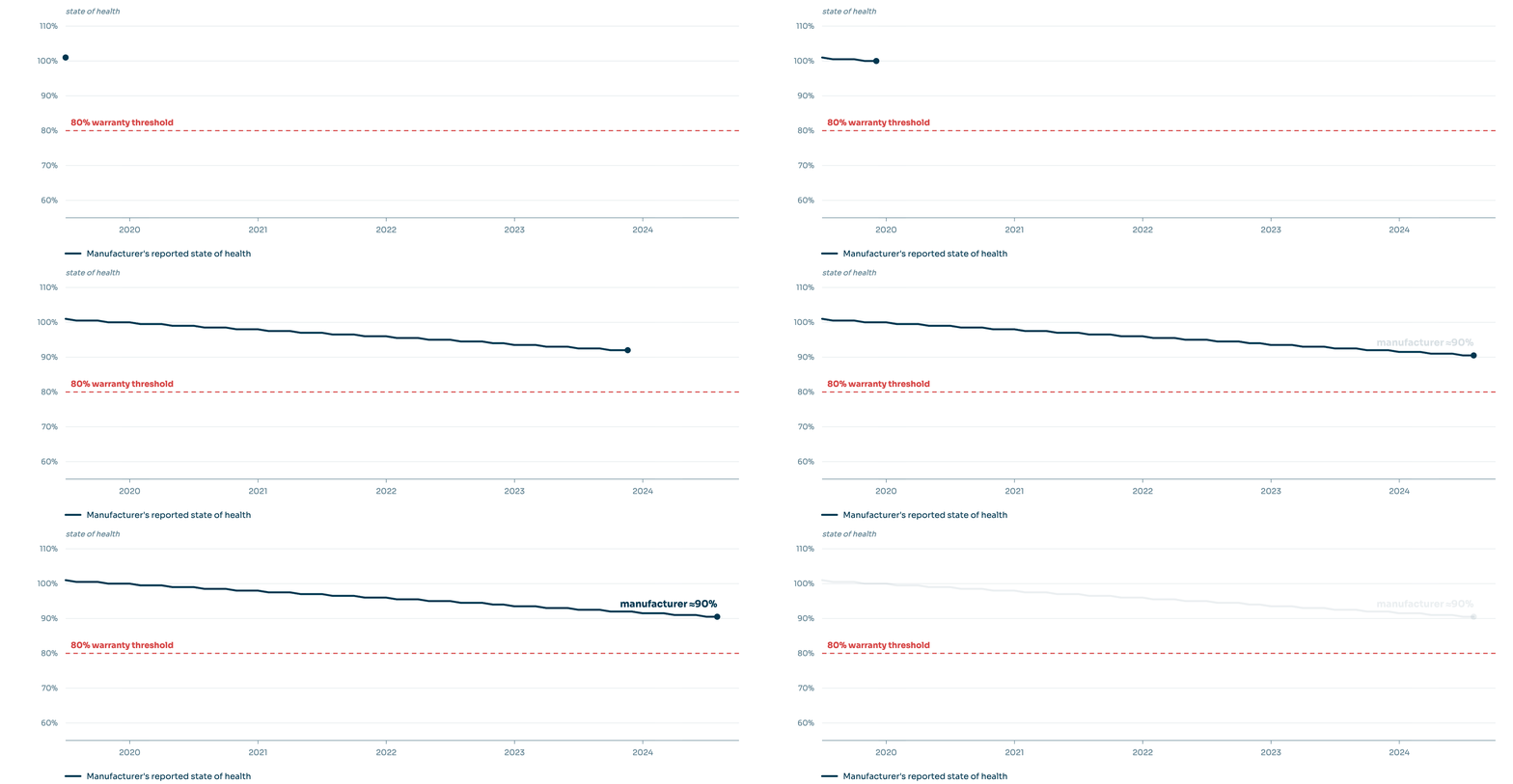
The only state of health data that the operator had came from the manufacturer's battery management system. The problem is that the figure is calculated by the party that is responsible to pay in the event of a warranty claim. So it's not unbiased. The manufacturer can also open up more of the battery for use as it ages. The bus would keep the same range on the dashboard while the battery still loses capacity so drivers would not see any change in range. It simply lacks transparency.
Batteries also do not age at a steady rate, so capacity can fall quickly after years of slow decline. Together, these three things make it hard to see when a battery has passed the warranty threshold.. This operator passed that point and saw buses show errors and stop with plenty of capacity still shown on their screens. They even had to tow back some vehicles to the depot. If the operator would have relied only on the manufacturer's figure, it would have missed the moment its battery passed the warranty threshold and would have to pay for the replacements themselves, and would have experienced operational problems increasingly.
Solution
Qera uses raw voltage and current that the bus already sends to measure state of health for their Battery Intelligence. It does not use the state of charge or the state of health that the manufacturer's systems calculate. So changing how much of the battery the bus is allowed to use does not affect the result. The measurement runs on every bus, every type of battery all the time.
This is what the operator now sees:
-
State of health for each bus over time with the warranty threshold marked.
-
Qera’s measurement and the manufacturer's figure are in the same chart, so any gap is visible at once.
-
Differences in battery degradation between buses of the same type define the ones that age faster.
Result
For the first years, Qera’s Battery Intelligence numbers and the manufacturer's numbers matched each other, but then they started to drift apart. The manufacturer's figure kept falling slowly (unrealistically linear) and still showed the batteries above the threshold. Qera’s measurements showed the battery passing the knee point and started to fall rapidly thereafter.
Enlarge
Enlarge
With this data as evidence, the operator claimed warranty successfully for the whole series of buses of that type. The claim was accepted and the manufacturers replaced the batteries at its own cost.
The operator also uses the same state of health data to set depreciation, to plan battery placements within its budget and time schedule and are able to put the healthiest buses on the longest routes.