


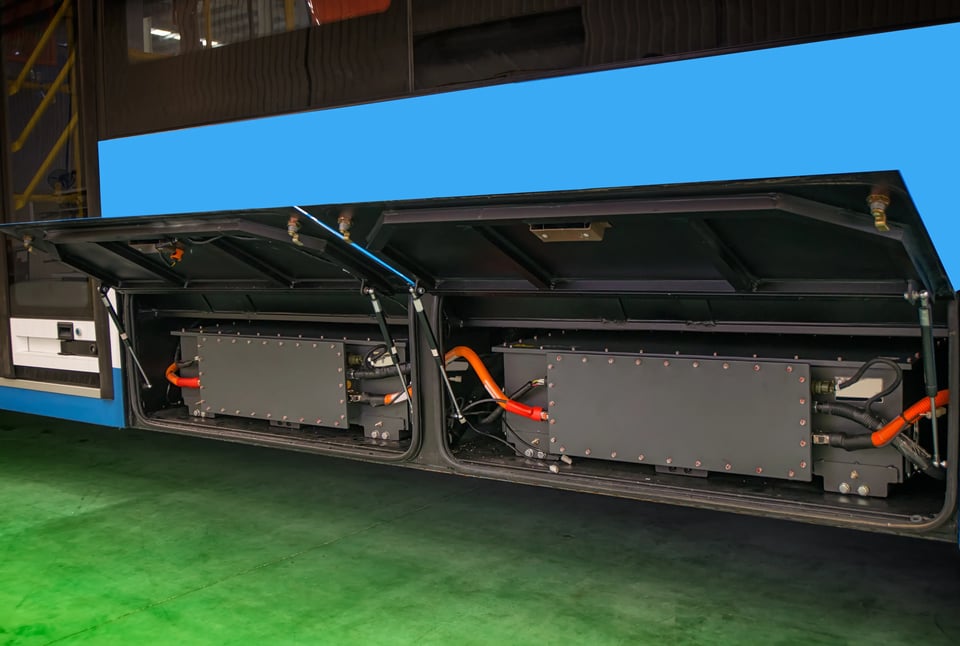
Every contract in one place.
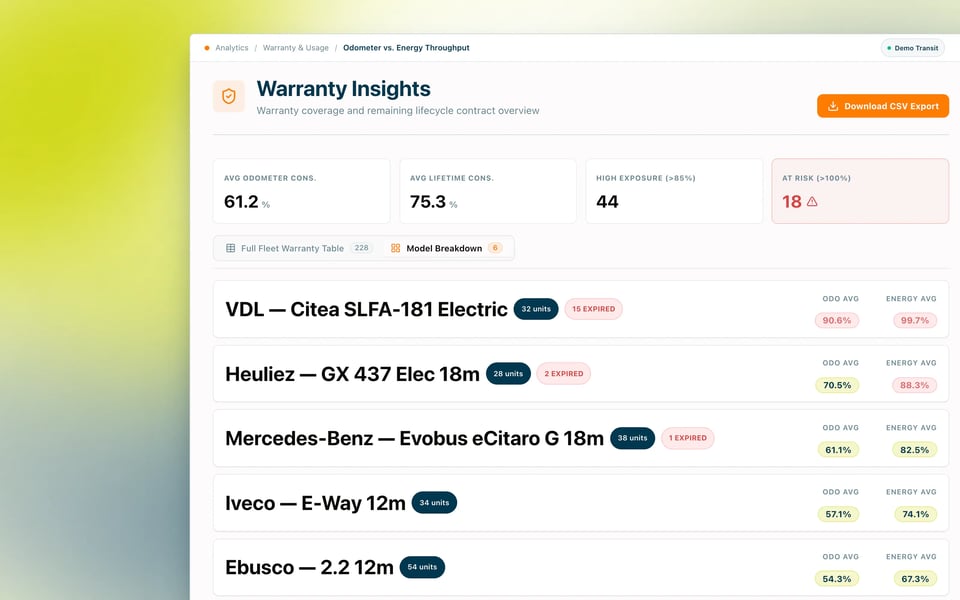
Warranty period, guaranteed state of health, maximum mileage and maximum energy throughput, matched to the vehicles each contract covers.
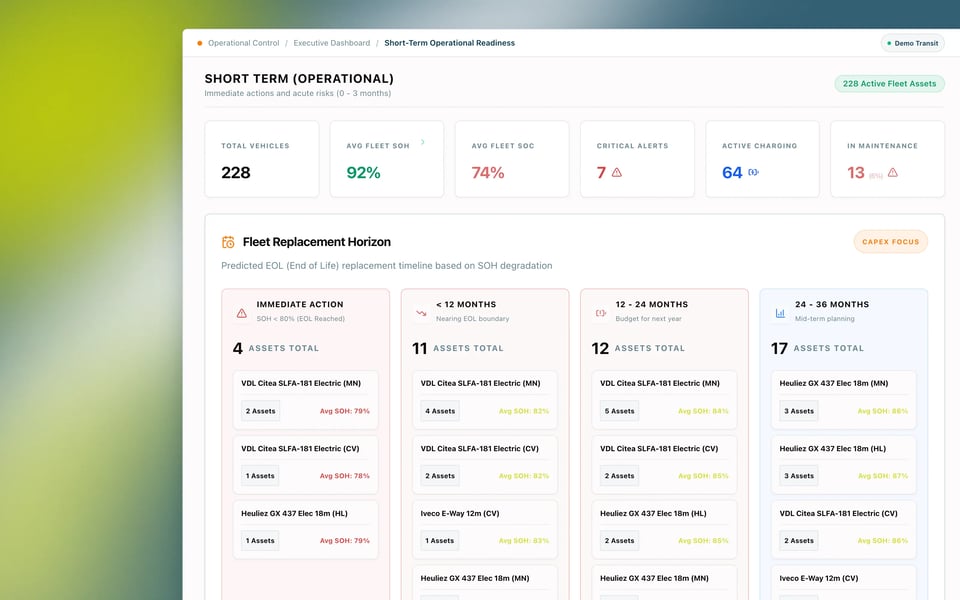
Manufacturer dashboards report battery figures that the manufacturer produces, corrects and controls. Qera Battery Intelligence computes state of health (SoH) from raw voltage and current alone. State of charge (SoC), cell balance and safety warnings use a few more raw signals, listed in the data requirements. No manufacturer figure is involved. The calibration is chemistry-specific, and the figures are validated against physical reference capacity measurements.
The engineering team owns the warranty claim, the maintenance regime and the replacement plan. All three depend on each battery's state of health, and that figure comes from the manufacturer, the same party that would pay the claim.
The figures are also buffered. Capacity estimates and correction algorithms hide the real energy left in the pack. A warranty claim, a route plan or a replacement forecast built on those figures rests on the manufacturer's own numbers.
Qera Battery Intelligence computes SoH from raw voltage and current only. SoC uses a few more of the battery's raw signals, listed in the data requirements. No manufacturer algorithm is involved in either.
The models are chemistry-specific, covering LFP and the NMC variants (811, 111, 532, 622), because each chemistry degrades differently. The figures are validated against physical reference capacity measurements.

Your right to the raw data from your own vehicles is settled EU law, and we help you exercise it during onboarding. Since 18 August 2024, EU battery regulation has also required electric vehicle batteries, buses included, to hold state of health data in the battery management system, with read-only access for the owner or anyone acting for them.

Qera tracks every battery against the warranty it was sold under.
Warranty period, guaranteed state of health, maximum mileage and maximum energy throughput, matched to the vehicles each contract covers.
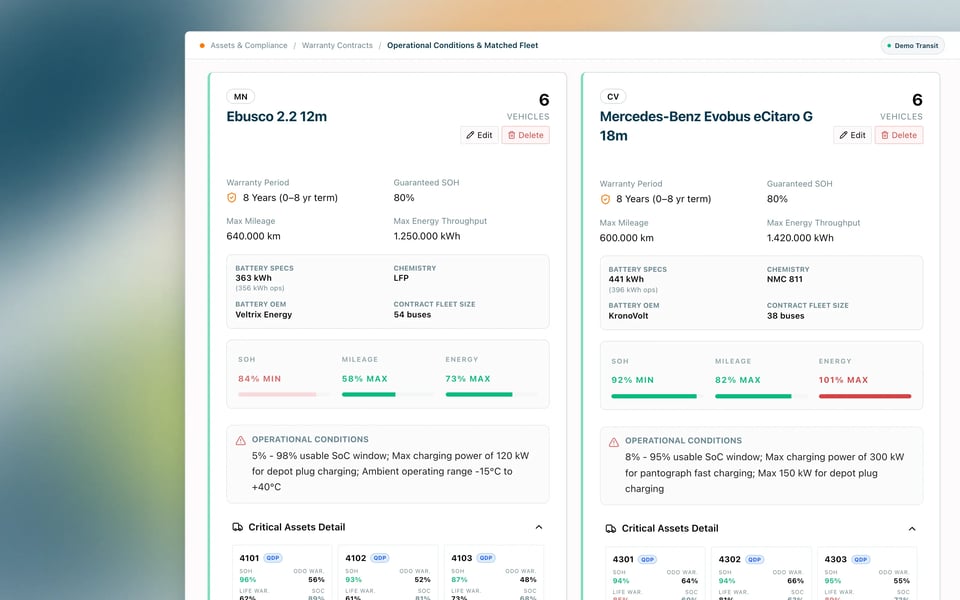
Usable charge window, charging power limits and C-rate limits, shown next to how your depots actually charge, so you can see where a manufacturer could refuse a claim.
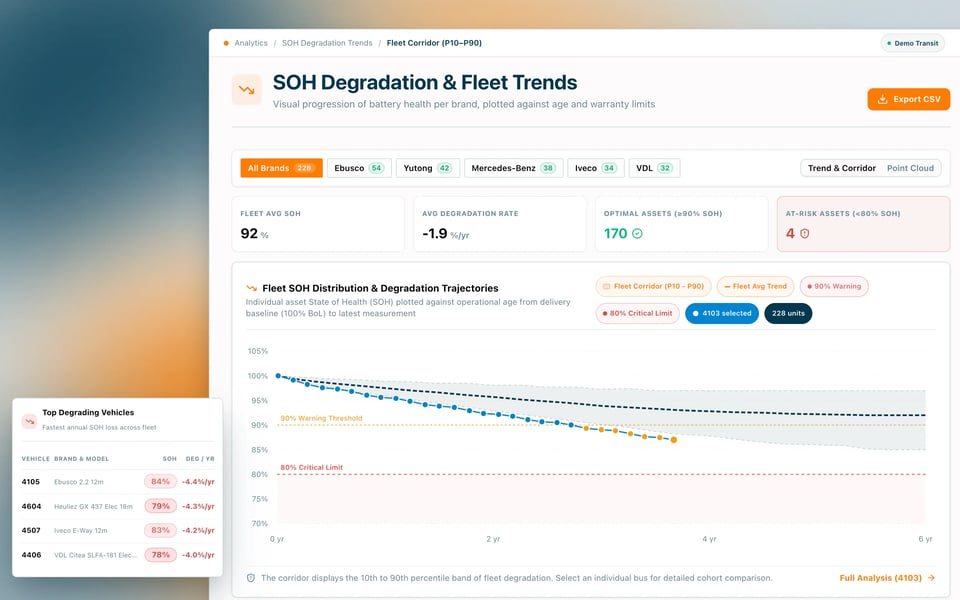
How much of each allowance a vehicle has used, and which vehicles are already past it.
If a supplier resets the onboard system during maintenance, their count starts again. Qera's does not.
New batteries have problems too. Charging faults and warranty issues can start on factory-fresh vehicles. Qbuzz saw it on its own fleet.
If you start recording only once a problem is visible, the evidence starts too late. Warranty disputes are won with data collected before the problem appeared, so the record has to start on day one, while everything still looks fine.
State of health is the battery's capacity compared with when it was new. We work it out from raw battery data only and correct for the depth of discharge, so the figure is the real technical state of health that a warranty claim can use.
Operational capacity is the usable capacity of the battery in kWh. It follows from the state of health, but it also depends on the depth of discharge and our own SoC estimate. It matches the SOCE definition in the EU battery passport.
Manufacturer displays show buffered, corrected estimates rather than raw measurements. The difference matters most near the bottom of the charge window, which is where decisions about whether a bus can finish its block are made.
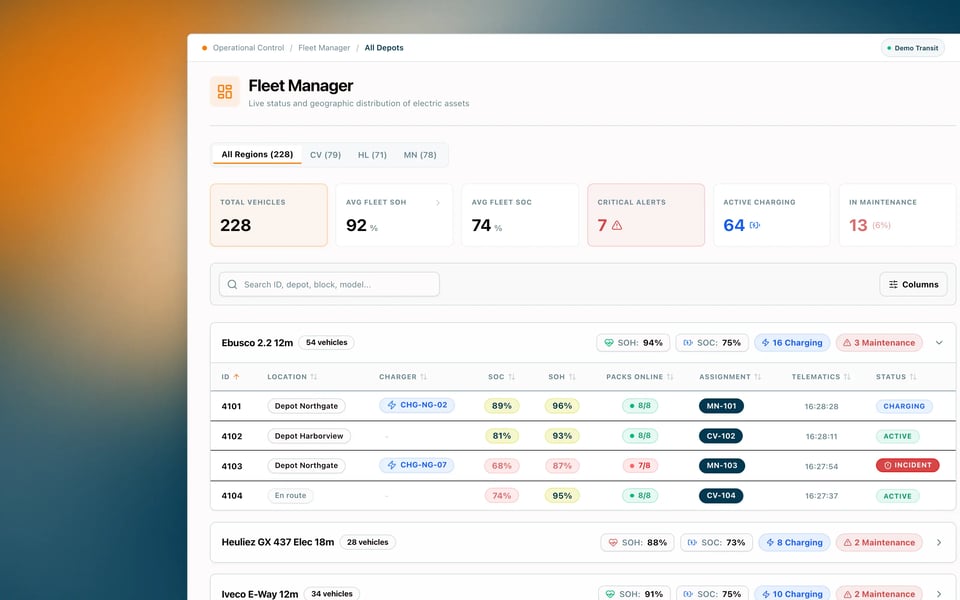
Yes. Safety alerts list battery temperature and safety warnings for every vehicle, sorted by priority, and online pack monitoring alerts you as soon as a pack disconnects. Cell-level monitoring uses the signals in the data requirements.
Thirty minutes with our team, and you decide whether it is useful.